A projected time for Lilith in book format: 2017
Some responses to your comments and questions
Some of you have asked who redesigned my website, A very talented lady by the name of Carmen Wong, she has a accomplished design sense and was easy to work with throughout the process we were faced with many technical challenges in redesigning the new site. The site was completed on time and worked right away in attracting traffic .There is a link to Carmen on my page at the bottom just click on site Carmenwonglinkedin
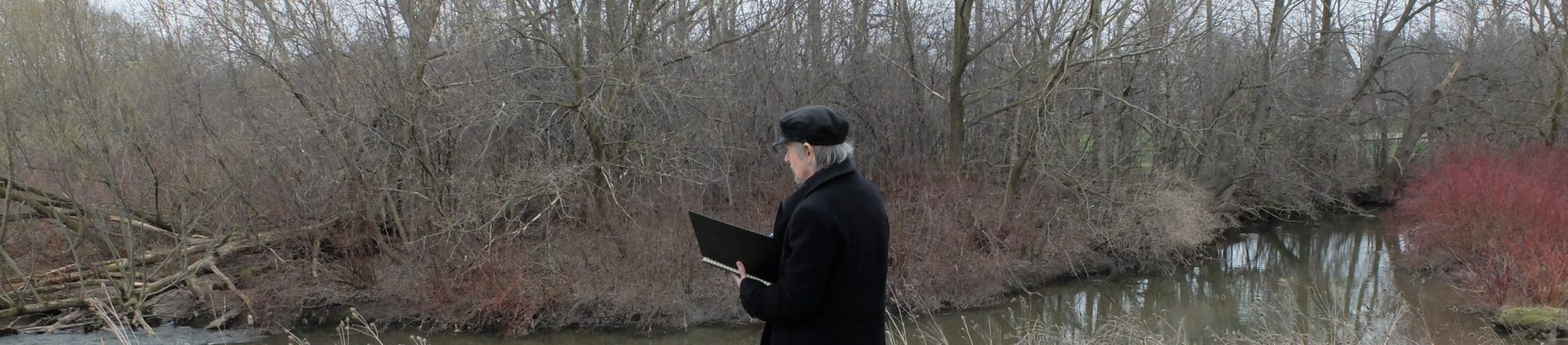
Kitchener artist follows own path by Robert Reid
June 10,
This unfashionability which has nothing to do with being old-fashioned — not only makes Tobin’s work unique, it speaks to his integrity and conviction at a time when artists all too frequently surrender to the marketplace.
A modest exhibition of 11 of Tobin’s works is on view through Aug. 13 at the Homer Watson Gallery, along with an exhibition of skyscapes by fellow Kitchener artist Norma McDonald and the gallery’s annual tribute exhibition to its namesake.
Although he would likely shudder at the label, Tobin can be described as a postmodernist. He employs the earth-tones, brooding atmosphere and glazing technique similar to the Old Masters, but there is nothing outdated or derivative about his landscapes and figure paintings. His work has a freshness which is no weaker for being subtle.
The exhibition’s title, Ethereal Properties of Landscape, accurately conveys Tobin’s artistic intentions, which are evident in the works themselves. His luxurious paintings are a pleasure to behold. They are beautiful in ways that gallery goers would recognize and appreciate prior to the revolution in the visual arts that accompanied 19th century French Impressionism.
Notwithstanding how one defines or responds to the tactile beauty of his paintings, Tobin is not primarily concerned with surface appearances — either in art or in life. Rather, his preoccupation is with the spiritual correspondences between humanity and nature. He attempts to give expression to these correspondences by penetrating surface appearances to reveal an inner, metaphysical reality that transcends time and place.
Tobin’s paintings are representational, but they are not to be read literally. Many are inspired by local landmarks — the Grand River, Victoria Park, Columbus Lake, Mount Pleasant Cemetery. But even viewers familiar with these places would have difficulty recognizing them.
Tobin is not interested in painting identifiable scenes, but in painting landscapes and figures that evoke feeling and/or the nude woman could just as easily have been painted a century ago as yesterday.
Similarly, there is a strong impulse toward idealization. His pastoral landscapes are both ideal and idyll.
Tobin’s paintings are best read metaphorically, as suggested by the title of his painting of a nude woman — The Poet and the Landscape — which shows a ghostly white woman lying down in what seems to be a cave, with its many symbolic associations.
Similarly, Figure and Winter Landscape shows a man with his back to the viewer entering a small clearing in thick woods from a snowy field. The emotion evoked by this wonderfully mysterious painting brings to mind Frost’s Stopping by Woods on a Snowy Evening.